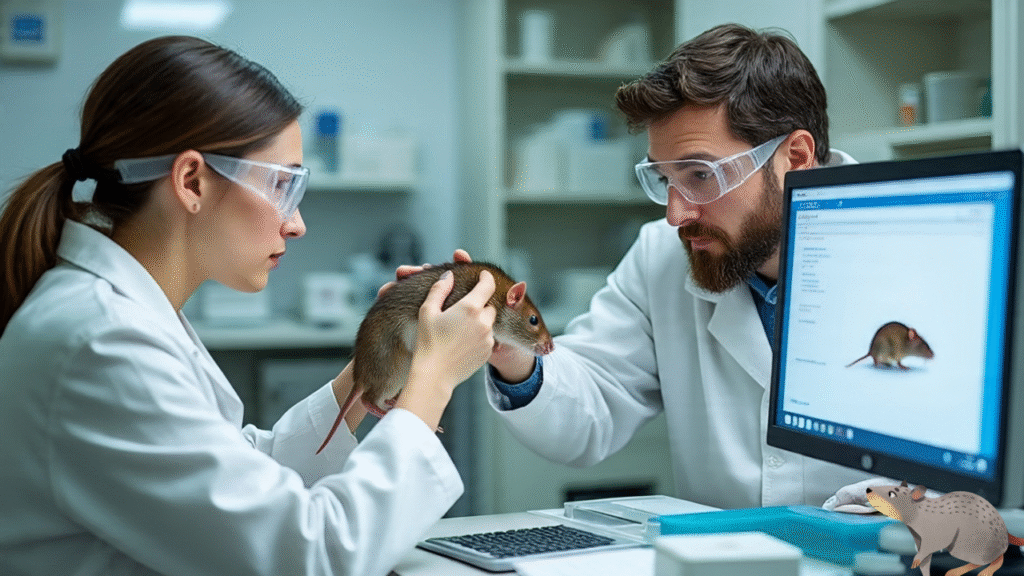
Rats are often used in scientific experiments because they have many qualities that make research easier and more reliable. Their genetic structure can be understood properly for which it helps scientists to study how certain genes affect health and diseases. Rats also reproduce quickly and have large litters, allowing researchers to observe results in a shorter time. Their bodies and organs are similar to humans, so experiments can give useful information for medicine and treatments. Scientists can control their environment, such as food and living conditions, which helps in getting clear results. Techniques like gene editing and creating knockout rats allow researchers to learn how specific genes work. Since many rats are genetically alike, experiments are more consistent and easier to repeat. All these factors make rats one of the most trusted animals in scientific studies. Using them helps scientists understand diseases and find new treatments that can help humans.

11 facts Why Scientists Love Using Rats in Experiments !
1. Genetic Similarity to Humans 🧬 : Rats share approximately 99% of their genes with humans, which helps for studying human diseases and testing potential treatments.
2. Complex Behavioral Patterns 🧠: Rats show a wide range of behaviors, including social interactions and complex problem-solving, which helps the resercher for studying neurological and psychological conditions.
3. Effective Drug Testing Models 🧪: The responses of drugs testing to the rats are almost same result to humans, which allows the researchers to assess the efficacy and safety of new medications before human trials.
4. Genetic Manipulation 🧬: Techniques like gene editing and the creation of knockout rats enable scientists to study the impact and their roles in diseases.
5. Neurological Research 🧠 : Rats’ brain structures and functions are well-documented and it provides a basis of neurological disorders for studying and testing potential treatments.
6. Reproducible Research 🧪 : Using rats with similar genes helps scientists get consistent results for making experiments more accurate and easier to repeat.
7. Cognitive and Memory Studies 🧠 : Rats are commonly used in tasks like the Morris water maze to study spatial learning and memory which provides insights into human cognitive functions.
8. Cardiovascular Disease Models 🧬 : Rats serve as models for studying heart diseases. Because their cardiovascular systems are almost similarities with humans which helps in the development of treatments.
9. Cost-Effective Research 🧪 : Compared to larger animals, rats are less expensive to maintain. So rats are cost-effective choice for extensive research studies.
10. Social Behavior Research 🧠 : Rats social interactions and hierarchies are studied to understand group dynamics and social behaviors, which can be applied to human social sciences.
11. Long-Term Health Studies 🧬 : Rats lifespan allows the researchers for the study of chronic diseases and for the long-term effects of a treatment which also helps for getting the valuable data towards human health research.
“Behind every discovery, there’s often a tiny hero – the lab rat! Let’s appreciate their role in advancing science.”